

A Complete Guide to Choosing the Right I Joist
I joists are highly popular throughout the world for flooring and roofing purposes. They are stronger and more consistent than solid wood beams and are easier to install. Selecting the right I joist is not always an easy decision. Many factors impact performance, including size, span, load capacity, and material quality. This guide details the important considerations so you can select the correct I joist for an application.
What Is an I Joist?
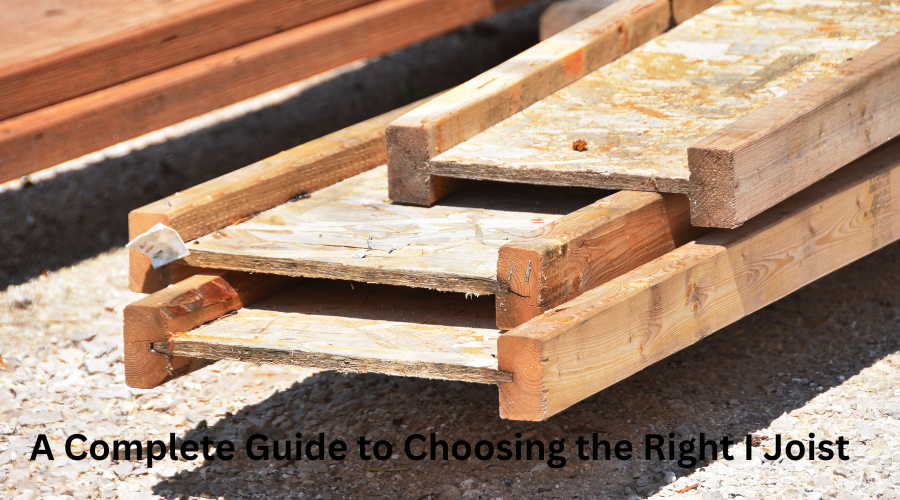
I joist is a manufactured wood component in the shape of the letter I. It consists of a thin web, top and bottom flanges. This is the design that uses a minimal amount of materials and has strong support. I joists are typically installed instead of solid materials because they don't warp, warble, or twist over time. Builders like to use I joists because they are uniform in quality. Since they are manufactured under controlled conditions, each piece performs similarly. This allows it to be easier to plan and install than natural wood beams.
Another good thing about it is the weight. I-joists also weigh less than solid wood beams with equal strength. This makes them easier to pick up, move, and set up in the field, which saves workforce and back effort for the construction crew.
Why Size and Depth Matter
Every joist has a capacity for the weight it can carry and a limitation on the distance between joists. Deeper joists provide for longer spans, which means they do not require so many extra support beams.
How do I know what size joist I need? The depth of the joists depends on both span length and loads. The longer the span, the deeper the joists have to be. A structural engineer or a span table can assist in determining the right size for a project.
The selection of the wrong depth can result in sagging floors or additional vibration. That is why it is critical to inspect and test span tables before ordering.
Understanding Load Capacity
Load capacity is the capacity of a joist to hold the maximum weight that it can withstand. This covers the weight of the floor itself, furniture, people, and any additional structural loads. Manufacturers offer load tables that chart load capacity in relation to joist spacing.
When considering the loads, it is often helpful to consider both live and dead loads. Live load is the weight of movable furniture or people. Dead loads are permanent structural loads, such as the weight of flooring materials or fixed installations. When looking at load tables, both should be taken into account.
Spacing Between Joists
Another factor of load capacity is joist spacing. The closer the spacing, the more weight that can be supported, but the more material is needed. Spacing widens, material costs drop, but thicker subflooring might be needed for similar performance.
Checking Flange and Web Quality
The flange is the top and bottom part of the I-joist. It is the main bearer of bending stress. Flanges are usually made from laminated veneer lumber or solid sawn lumber. Better quality flanges will reduce the risk of splitting and weakening with time.
Why is the quality of the web important in an I joist? The web joins two flanges and resists shear forces. Damage can occur prematurely with poor web materials. When in doubt, check that the web is constructed from good-quality oriented strand board or plywood. A second strength factor is web thickness. Generally, the thicker the webs, the more they will resist accidental damage or punching when set.
Considering Moisture Resistance
Moisture can degrade wood products over time. Certain I joists are treated to include coatings or moisture-proof materials. This is particularly pivotal in regions with humidity or close to washrooms and kitchens. Always enquire from suppliers regarding moisture protection features. This minor detail can help increase the life of the flooring system.
Evaluating Manufacturers and Standards
Joists come in a wide variety. There are differing standards, quality control, and certification among suppliers. Check joists to ensure they comply with accepted building codes and engineering practices in your area.
Checking Certifications
Certified products are tested and established as safe and effective. That means a lower risk during construction and an ability to meet local building codes. Always ask for certification documents when placing an order.
Matching the I Joists with the Project Type
Are all I joists appropriate for floors and roofs? Not always. Floor-load I joists are better for floor loads, and roof-load I joists are better for roof loads. Check any intended use with the manufacturer before buying. Typical residential projects will have common joist spacing and depth. For larger commercial projects, heavier loads and longer spans require deeper joists with additional reinforcement in the flanges.
Installation Considerations
The performance of an I joist over time depends on proper installation. Joists require proper blocking, rim board support, and hanger connections. It is possible to create a weak connection even with a good-quality joist if these steps are not taken.
Installation instructions are frequently included in the manufacturer's guides. If they are adhered to strictly, then structural problems can be avoided later. Additionally, expert contractors who have worked with engineered wood products decrease installation mistakes.
Cost Considerations
The installed cost is higher for I-joists than for solid lumber. They are there; however, more often than not, they reduce the time required for your labor, making handling and installation easier. They also minimize the long-term problems of squeaky floors or warping.
Look at the complete situation when comparing costs. These involve savings in material and labor costs and longevity. The lower-cost option can have higher maintenance costs down the road.
Also seek out explanations from suppliers on costs for quantity, delivery distance, and customization. This provides a better comparison between them than a simple base price per unit.
Environmental Considerations
I joists are engineered wood, which may require fewer raw materials than a strong solid beam. This makes them more cost-effective for many in the building. Selecting suppliers with sustainable sourcing measures also takes another step toward benefiting the environment.
Some manufacturers also utilize recycled wood fiber when making the web. Inquiries about these practices can help buyers meet greater sustainability objectives while still meeting structural performance requirements.
Conclusion
The selection of an "I" joist is dependent on multiple factors. It depends on the span length, the load it carries, the joist depth, and the material. Inspecting certification and verifying moisture resistance can provide value to any construction project. By doing the proper research, builders can choose I joists that will provide strength, uniformity, and longevity for years.
FAQs
Where should I buy I joists in bulk for a retail business?
Purchase from manufacturers that do allow bulk orders. This can lead to more pricing advantages and uniformity of product quality.
How to buy I joists in wholesale at affordable rates?
Research several quotes and inquire about wholesale rates. Bigger orders typically have lower order costs.
How can one find an I-joist supplier that offers customization as well?
Consider companies that offer custom lengths, depths, or flange specifications to meet specific project needs.
Is there any supplier of I joist who offers bulk supply with customization at low prices?
Yes, some manufacturers offer bulk pricing and customization services. Directly talk to suppliers about project requirements.