

What Do Contractors Look for in a Laminated Veneer Lumber Manufacturer?
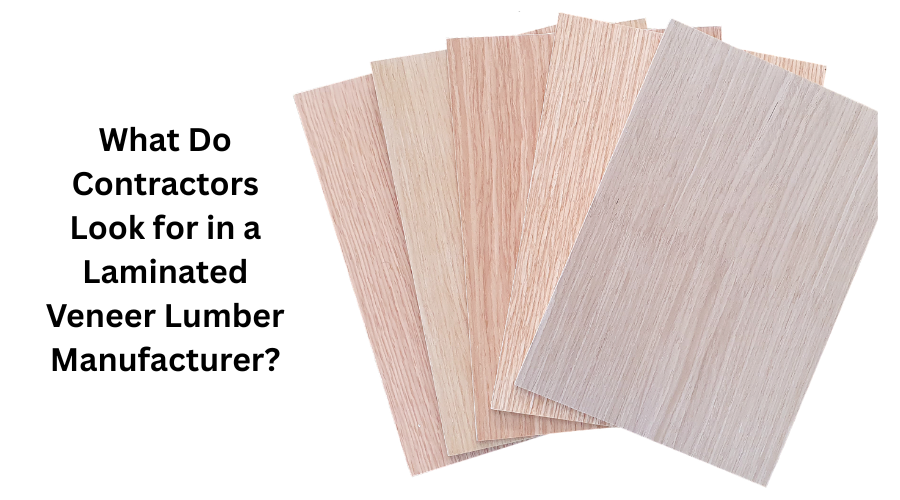
Contractors know the importance of structural support. Their every project has to be consistent and remarkable because there are lots of things at stake. People choose properties that are safe, and safety comes from the structure and the material used in it. In wooden properties, the LVL beams, floor joists, rafters, and headers are the primary structural components. Anything that goes wrong with them could risk the entire structure. This is why construction experts have to be very cautious in sourcing the LVL construction goods. Construction experts look for uncompromised quality of wood, binding process, and durability when choosing a manufacturer. There are many other factors in it, and you can find more of them in this blog.
What Core Elements Does a Manufacturer of Laminated Veneer Lumber Have to Consider?
No manufacturer wants to hear complaints like cracks, swelling, or sudden collapse of LVL products. These products are the core support for every wooden structure. To eliminate the risk of failure, they have to consider some core elements like strength, durability, compatibility, reusability, and density of LVL beams. The same is for rafters, headers, and floor joists. When we further go into details, these factors expand in a well-detailed form, and that is what clarifies everything to construction experts.
Which Quality Factors Do They Consider?
There are around ten quality factors every manufacturer of LVL has to look at. The load imbalance or poor density can destabilize the symmetry of a property. In the worst case, the property may collapse after consistent load on weak spots. Here are the quality factors that are considered by a manufacturer of laminated veneer lumber for construction professionals.
-The laminated veneer lumber has to be highly dense, durable, heavy-duty, and reliable.
Its moisture content must be below 10% for ideal quality.
-The even surface and intact structure are to be compatible with superior load distribution.
-The same is true with its sheer capacity, which has to be high enough based on each project.
-Its bending strength has to meet the requirements of the project to prevent sudden collapse.
-LVL must have a tight structure against every risk of open pore or crack. As a result, there will be an intact structure against the risk of moisture.
-Following building codes and safety compliance makes it safer to choose live load and dead load for LVLs.
Which Standards Do LVL Manufacturers Have to Comply with?
LVL manufacturers have to follow global standards to avoid any legal issues. That legal matter may arise if there is any flaw in the production quality, because lots of lives can be at stake. A building that collapses also takes the lives of many in it. So, LVL manufacturers have to comply with FSC, ISO 9001, EN 14374, and ASTM D5456 standards. They also need ISPM 15 certification for termite-proof quality and fumigation evidence. There are many local standards depending on each region's rules that need compliance from manufacturers.
What is the Manufacturing Process of Laminated Veneer Lumbar?
Here comes the manufacturing process for LVL beams, joists, rafters, etc. They all need similar manufacturing steps for LVL standards. What gives them extreme strength to bear massive live load and dead load is the number of layers and their highly intact structure.
Log Peeling and Veneer Production Process
Manufacturers perform log peeling by turning massive logs into desired sizes of sheets. This peeling process is automatic in this modern age, where a specific size range is decided based on project requirements. Similarly, they do grading to separate high-grade sheets from low-grade ones. Each veneer is around 3mm thick in the production of LVL beams, joists, and similar items.
Moisture Removal Process
Then the drying process takes place, where the manufacturers remove moisture from these sheets. They leave a negligible moisture content near 10% to meet the global requirements. Complete removal of moisture will make the veneers brittle and prone to cracking. Excessive moisture will make them soft and swollen. So, they have to stick to a specific percentage between 8% and 10%.
Adhesive Application
Now, all the veneers go through the adhesion or layering process. This is where they get adhesive for the binding process. Industries use phenol-formaldehyde or Bakelite adhesive for these LVL beams, joists, etc. This is a special adhesive that resists heat, water, and chemicals. Once all the sheets get an adhesive application, they are moved to the next step.
Veneer Binding Process
In this second-to-last process, machines bind the veneers with high pressure and temperature. Multiple layers of veneers are laminated into a thick lumber through this process. This is a compatible adhesive because no other adhesive could meet the requirements of laminated veneer lumber. Pressing under heat and high pressure makes them stable for long-term use. This is why they could survive decades or even a century without showing signs of collapse or cracks.
Finishing and Quality Assurance
In the finishing process, LVL joists, beams, and every product get a final touch. Manufacturing teams remove flaws or uneven edges from them. They make sure the lumber is uniform in size, thickness, and overall dimensions. Some get additional coats depending on the environment where they will be installed, and some get aesthetic coats. Different kinds of finishing factors contribute to the final form of LVL beams, joists, etc.
Conclusion
Contractors have to make sure the manufacturer of laminated veneer lumber they choose meets quality requirements. The strength and durability of wood are the primary factors. Neglecting them can risk lots of things, including lives. This is why the beams, joists, rafters, and every other LVL wood product have to be compliant with global rules. The production process ensures all the wood is intact against the risk of cracks, swelling, and bending. Overall, the test samples and lab reports of the LVL beams and every other item further qualify a manufacturer.
FAQs
How Can I Find an LVL Manufacturer Who Has Certified Quality?
You need to search for a reliable manufacturer of laminated veneer lumber on B2B platforms. There are many manufacturers who have certified quality, reasonable rates, and global supply. Shandong Unique New Material Co., Ltd. is also a good option.
What is a Cost-Efficient Way to Procure Heavy-Duty LVL Beams, Joists, and Rafters?
The cost-effective way to do that is by choosing a cost-efficient manufacturer of laminated veneer lumber. If someone offers you prime quality at reasonable rates, it is a cost-efficient solution for you. Construction experts choose such manufacturers for reliable results. If you want, you can try Shandong Unique New Material Co., Ltd.
Can a manufacturer of Laminated Veneer Lumber Offer Custom Production?
Yes, there are many Chinese manufacturers in the industry who have custom solutions. They can also offer a budget-friendly price range along with affordable MOQs.