

Everything you need to know about the I Joist supplier
In commercial buildings and homes, the floor and roof must be supported to be built. This type of support relies on I joists. They are built products that incorporate engineered wood and can be used in global construction. As a builder, contractor, or developer, one of the most critical parts of your development process is having a reliable I-joist supplier. The right supplier saves you time, money, and headaches on-site.
This guide covers everything you need to know about I joists and how to choose the right supplier.
What Is an I Joist?
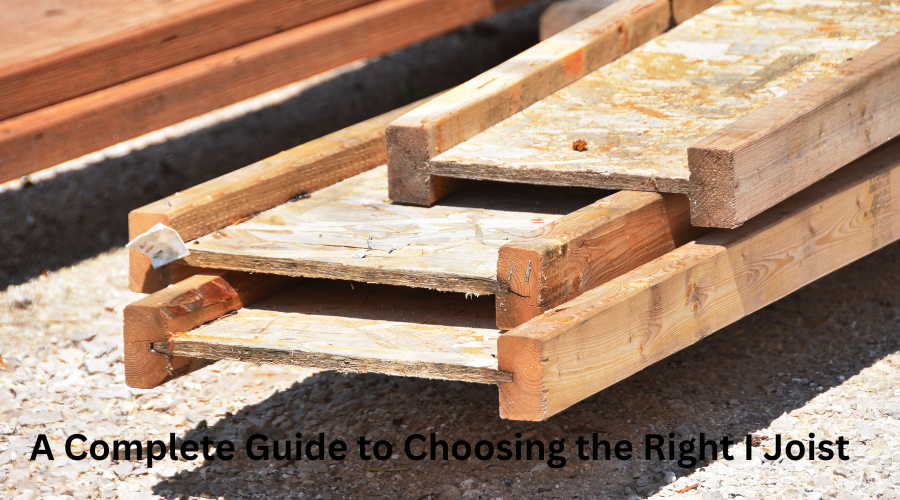
A joist is a structural engineered wood piece. It consists of a top flange, a bottom flange, and a vertical web in between. Typically, the flanges are composites of laminated veneer lumber or solid timber. Typically, the web is constructed from oriented strand board (OSB).
This shape is on purpose. The main objective of the 'I' design is to allocate weight efficiently. Strong at the top and the bottom area where bending stress is highest, and light in the middle area where the bending stress is lower.
I-Joists uses
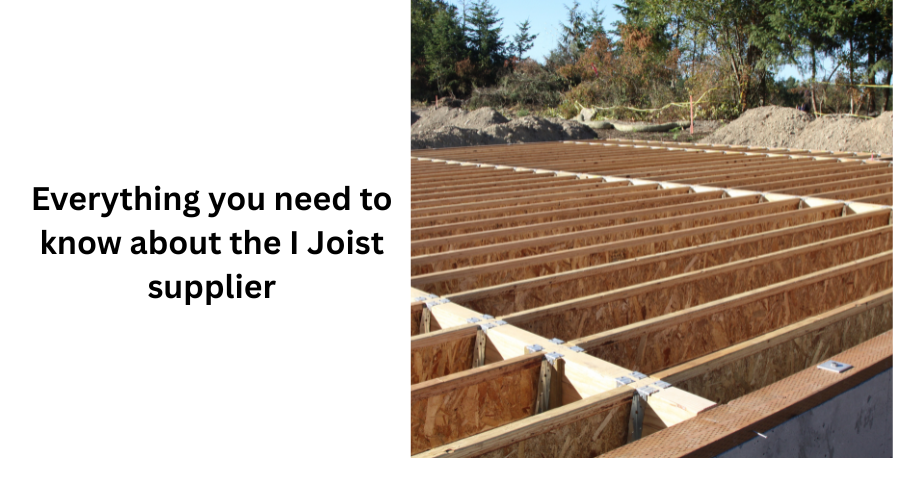
I-joists are found in floor, roof, and wall framing. They are very popular for domestic building projects. They are found in the floors of houses, apartment blocks, and commercial buildings. They also form part of flat roof designs that require no supporting columns for long spans.
Builders use I-joists because they span farther between them without sagging. This means there is a reduction in having to construct cross columns within buildings. It provides architects with greater design flexibility in layout and homeowners with more open-floor-plan options.
Why is selecting the right Supplier important?
There are many different I-joists. There is good variation in quality among manufacturers. A poorly made I joist, or a weak one, causes an I joist to bounce the floor, squeak, and in severe cases, even fail! That is why it is vital to use a trusted supplier of I joists.
Responsible Supplies doesn't just sell a product. They will offer technical support, accurate product information, and constant stock. On large construction jobs, unstocked items or late deliveries can cost thousands of dollars due to delays. An effective supplier keeps your project on track.
What to Look for in an I Joist Supplier
Product range and sizing
The size of the joists depends on the project. A good supplier will provide a variety of depths and lengths. The common depths are from 150mm to 400mm and higher. When you have the option to order various sizes from a single source, you make purchasing materials easier and delivery issues a breeze.
Certifications and Standards
Always ensure that products are compliant with local codes of buildings and engineering. For instance, in the UK, joists should meet the appropriate British Standards or European Technical Assessments. In the United States, companies are usually evaluated by entities such as APA — The Engineered Wood Association. If they are certified products, you will know that the joist has been tested independently.
Technical Support
Some suppliers provide design software or span tables. These permit engineers and builders to make an accurate estimate of the proper joist size for a project. This is the kind of support that makes a supplier a valuable partner, rather than simply a vendor.
Stock Availability
Not having enough joists on hand is a serious issue. Check with suppliers on their warehouse and lead time availability. Are they capable of completing big orders promptly? Are they holding stocks or ordering to stock? If time is running out, these questions are important.
Should I purchase I-joists locally or from an International supplier?
Local suppliers may provide quicker delivery and better communication, while international suppliers may offer lower prices for bulk purchases. It all depends upon the size of your project, its timeframe, and budget. It is best to choose a local supplier for any project.
How I-Joists Compare to Traditional Timber?
The traditional construction, using solid timber joists, dates back more than a century. They're still useful in many situations. However, whenever I build some distinct benefits of using, I just.
Consistency
Some solid lumber will be knotted, warped, and have grain irregularities. These natural defects reduce strength and will lead to problems after installation. An I-join's construction is under controlled conditions. All pieces conform to a set specification. There is limited variation between different individual joists.
Easy to carry and lightweight design
I-joists are lighter than solid timber of the same span capacity. This allows them to be more portable and convenient to work with in the field. Also, it lessens the load on the structure below.
Less Waste
I-joists are manufactured to specific sizes and lengths, reducing waste in cuttings. This is budget-friendly and eco-friendly.
Questions You Should Ask a Supplier Before Ordering
When ordering from any supplier of I joists, ask the appropriate questions. This prevents issues in the future.
Inquire about minimum order size. Certain suppliers are restricted from selling large quantities. This may be a problem for smaller contractors. Share the delivery times and their ability to ensure supply during your project. If the products are damaged, inquire about the returns or replacement policy. Inquire whether they have a span table or design help. Inquire about documentation whenever you have questions about whether the product meets the required standards.
Can I-joists be used for roof construction as well as floors?
Yes, they can. I-joists are used extensively in either flat or pitched roofs. They’re long-distance and can prevent the need for internal load-bearing walls. For roofing applications, follow the advice of a structural engineer and order with the correct specification.
Pricing: What Affects the Cost of I Joists?
In any construction project, price is always a primary consideration. There are a few variables to consider when choosing how much to spend on I-joists.
The depth and length of the joist are the biggest factors. Those larger, deeper, and longer joists will be costlier. The flanges must also be made of a material with certain properties. Solid timber flanges are usually inferior in strength and cost to laminated veneer lumber flanges. Not to mention, brand reputation is a factor. For established brands with a reputation for consistency and quality control, they'll be more expensive.
Costs are always cheaper per unit when using bulk purchases. For large projects or works in progress, please check with your supplier about a volume discount. Many suppliers will welcome this for repeat business.
How to Find a Reliable I Joist Supplier
Begin with the other contractors and builders they work with. Word of mouth in the construction industry is powerful. Recommended suppliers are generally reliable.
Search trade directories and trade associations online. There are timber/engineered wood trade bodies in many countries that provide lists of approved suppliers. A place to begin looking for certified and accountable companies.
Visit trade shows. Engineered Wood and Construction Product exhibitions connect suppliers with buyers.
After you get a short list of products, ask for product data sheets and samples. Review the specifications. Avoid taking the lowest-priced choice. Don't decide based on something without considering lead time, support, and reliability.
Does the quality of construction really depend on the I-joist's brand?
Yes, it does. It is a fact that famous brands spend money on quality, testing, and R&D. Their products have more uniform quality and can be better documented. Another, lesser-known vendor could offer lower cost but higher risk of product variability or poor technical service. When it comes to structural use, there is never a compromise on consistency or reliability.
Conclusion
I-joists are an excellent option for today's construction. They are sturdy, powerful, light, and flexible. However, they depend on where you buy them. A quality I-joist supplier should offer a dependable I-joist supply, good technical service, and quality products.
Do investigate your supplier thoroughly. Make smart inquiries, validate certifications, and get to know a professional you can rely on, project after project. It is the way in which good buildings are built.