

Everything You Need to Know About Wholesale I-Beam
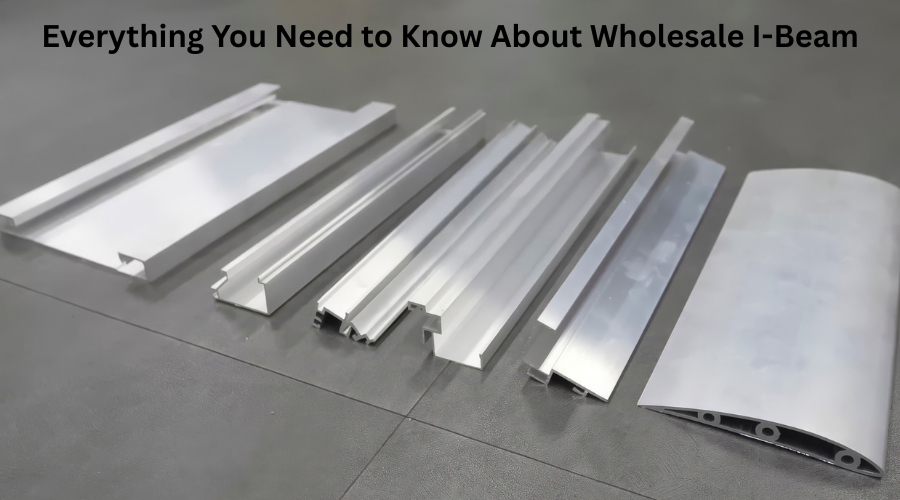
Steel I-beams have become one of the most common construction materials used in building. They carry massive loads and can support structures for years. Buying bulk I-beams benefits contractors, developers, and builders. However, it is good to know what you are getting for the wholesale order and what they are offering.
What Is an I Beam?
The I-beam is a steel structural section. It consists of two horizontal flat ones, known as flanges, and the vertical one in the middle, known as the web. This design is among the most efficient shapes in structural engineering. Flanges take up the bending load, and the web carries the shear load. They help ensure that the beam can carry heavy loads over long distances without requiring extensive amounts of material.
Depending on size and shape, I beams may be called H beams, universal beams, or wide flange beams. They are frequently confused in the industry, but the terms entail inherent differences. Always give the precise specification when ordering from the wholesaler rather than the name.
What are I-Beams used for?
In nearly all construction projects, I-beams are found. They are vertical components in building frames that support floors and roofs, as well as horizontal members. Long-span I-beam columns feature wide open floor spaces in industrial buildings and warehouses, without the need for many internal columns. In a storage unit or manufacturing facility, where space must be clear, this is very important.
The I-beam is the main structural component in bridges. In factories and workshops, heavy machinery is sometimes suspended from the overhead I-beam rails. They also serve in the construction of mezzanine floors, crane gantries, and the support structures for heavy equipment.
There are many possible uses. I-beams are one of the most commonly ordered structural steel items worldwide for this very reason.
Why Buy I Beams Wholesale?
It is easier for most businesses to purchase bulk quantities of I-beams from a wholesale supplier than to buy individual I-beams from a retail supplier. The price gap is huge. The prices for bulk orders are based on volume. The bulk discounts for your purchases will decrease as the quantity increases. These savings can really mount up with large projects involving hundreds of beams.
A similar pattern applies to the amount of inventory that wholesalers have compared to smaller distributors. This means faster delivery of goods and fewer project delays caused by stock shortages. A good wholesaler will also cut beams to the desired lengths before delivery, saving on-site labor and material costs.
The sizes and specifications of an I beam
What the Numbers Mean
A beam is designated by its depth, size of its flanges, and its weight per meter. These values indicate the amount of load a beam can support. The larger, heavier beams can support greater weight.
These are the three measurements you always use to indicate size when ordering wholesale. Avoid poor descriptions such as "standard size" or "medium beam. When it comes to steel suppliers, there is no room for mistakes, since it is often sold to exact specifications.
Steel Grade Matters
The steel used to make I beams varies. This strength will vary with different grades. In European markets, the most popular grade for construction is S275 or S355. S355 is reinforced and used for combinations of longer spans or higher loads.
Always quote the steel grade when placing a wholesale order. It's a big engineering risk to use the wrong grade in a structure. The structural engineer should indicate the design grade on the project drawings.
The difference between an I beam and an H beam
I-beams generally have less width than height, which allows them to have a more pronounced "I" shape. H beams feature relatively wide flanges, with a more rectangular or “H” type shape compared to the cross-sectional area of the beam. H-beams are used more frequently as columns and support heavier loads.
What to Look for in an I Beam Supplier
As key as picking the right beam size is, you must also find the right wholesale supplier. The wrong supplier can result in delays, poor quality products, or not enough stock on hand in the middle of the project.
Mill Certification and Material Traceability
A good wholesaler will have mill certificates available for all batches of steel supplied. The mill certificate is a document that states the steel's grade and dimensions. It shows the material's chemical composition and mechanical properties. This documentation is important when a project needs to be quality signed or structurally inspected.
Stock Depth and Lead Times
Inquire about the sizes they can provide and their lead time on sizes not in stock with them. Some suppliers have a variety of standard sizes on hand. Others are on a supply-to-order basis, with a longer lead time. People will be able to save a lot of money on some projects that require an immediate answer.
Cutting and Processing Services
Many wholesale suppliers of I-beams offer cutting, drilling, and shot-blasting services. Having beams cut to your specifications before delivery will save time and reduce on-site waste. Inquire if these are free or have an extra cost.
Delivery Capability
I-beams are long and heavy. Many delivery vehicles cannot accommodate them. Verify transportation availability with the supplier for orders and site location. Several suppliers will be able to bring a Hiab crane or a lorry on-site to facilitate offloading.
Does steel grade affect the cost of I-beams?
For sure. For instance, S355 steel is stronger than S275 steel and hence uses a more controlled production process, although it costs more. The drawback of a higher grade is that it requires a smaller or lighter size beam for a given load. This can reduce overall steel needed, offsetting higher steel costs.
Errors to Avoid
Avoid ordering the wrong specification. This typically occurs whenever a buyer gives only rough dimensions and grades. When ordering, always use the structural drawings.
Failure to check lead times is one major pitfall. If not available in the required size, it can take a few weeks to obtain. This has to be avoided by planning procurement and ensuring availability before fixating on timelines.
Steel is heavy, and delivery costs increase with larger quantities and longer distances. When comparing suppliers, always get the delivered price, not just the material price.
How to test the quality of the I-beam delivered from the wholesaler?
Verify the specific delivery against the issued mill certificates. Check the heat number stamped on the beam and make sure it matches the certificate. Check for surface flaws, excessive rusting, or dimensional variations. Compare the dimensions of a sample of beams with those indicated. If it does not match, point it out to the supplier as soon as possible, before the material is used on site. A good wholesale supplier will have a way to deal with quality issues.
Conclusion
I-beams sold in wholesale are an essential component in building, civil engineering, and industrial construction. Knowing the specifications, asking the right questions of your supplier, and planning well would make a huge difference to the project's time and cost.
The good wholesale supplier will not only sell you steel. They will provide you with the appropriate stock, correct paperwork, and timely delivery. Do a little research, and the rest of the procurement process will be much easier.
Faqs
Q1. What are the main uses of I-beams in construction and industrial projects?
I beams are used as primary load-bearing members in building frames, warehouse roofs, bridges, mezzanine floors, crane gantries, and heavy equipment support structures.
Q2. How to choose the right supplier for I beams?
Choose a supplier who provides full mill certifications, holds a wide range of standard sizes in stock, offers cutting and processing services, has reliable delivery capability for heavy loads, and has a clear quality dispute process.