

The Complete Guide to I-Beams
Contractors and civil engineers know the struggle of building massive projects. They have to choose the best material and their components when it comes to providing safe and reliable projects. Every element matters in it, because a little negligence can cause a severe problem for all. To make steel structures safe, they need I-beams of high-grade steel. The support for the roof and floors will be impossible without these beams. If you don’t know what these beams are and what they do, here is all you can read.
What is a Structural Type I-Beam?
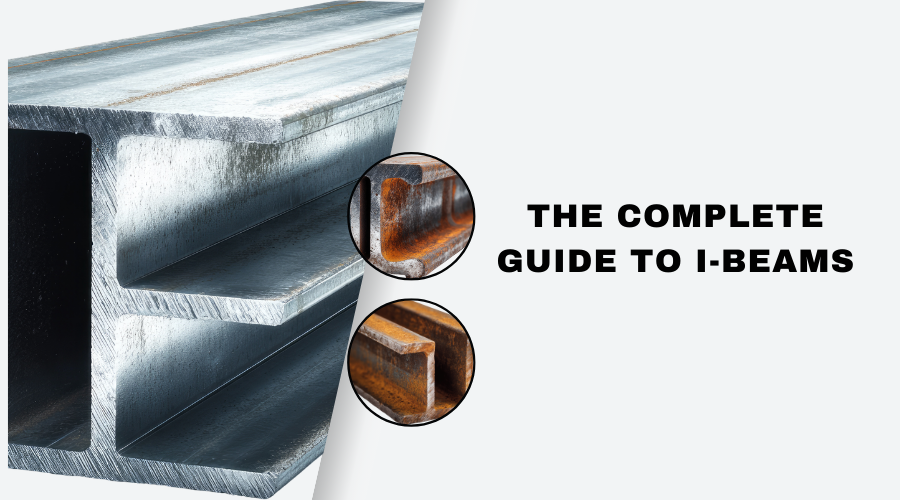
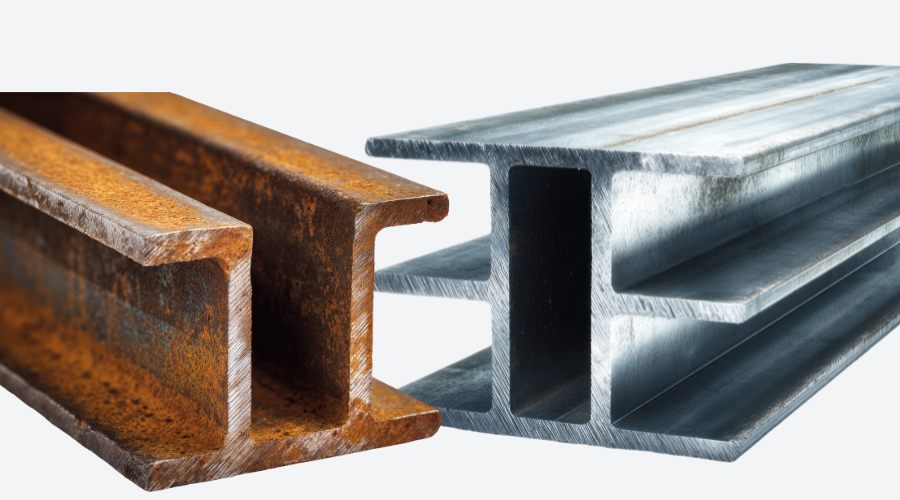
They are stainless steel beams that appear like letters. What they do is provide structural support for the roofs and floors in metal structures. You can consider them the primary support for every construction project. Contractors know how crucial they are because they do precise load distribution. The roofs and floors get balanced support with the help of I-beams. The central part is called the web, and the top and bottom parts are flanges.
They bear both dead load and live load without showing any signs of vibrations. That is the whole purpose of I-beams in every construction project. Their shear capacity is very high, which makes them survive longer, like decades. The entire structure depends on the foundation and also these steel components. I-beams create a balance in the building structure to provide a stable support for the concrete and other materials.
What are the Prime Benefits of I-Beams?
The biggest benefit is the support these beams provide to any steel structure. Then comes the stability in the ceiling and flooring of any building. From a few-story building to a skyscraper, I-beams are versatile for all structures. The construction experts choose them when they need light elasticity and more strength against massive loads.
-They provide a large cross-sectional area for stable balance. Each beam contributes to completing the web of the entire steel structure.
-What makes them standard beams is their weight and the less material. They are lighter than H-beams, and that makes them ideal for most structures. I beams require less steel for production than other types.
-I-beams prevent collapse in most cases, except in natural disasters.
-Their optimum elasticity maintains the stability against mild vibrations and shocks. The entire structure remains firm and stable for decades by maintaining its elasticity in all weathers.
-They have less shrinking and low warping, which makes them a more trusted option than many alternatives.
-Their deformation resistance makes them a safe choice for skyscrapers and bridges. Besides, they are suitable for warehouses and similar structures.
-Their stiffness is exceptional, which meets the requirements of various projects.
Difference Between I-Beams, H-Beams, and W-Beams
Here is what you can further understand about I-beams. By comparing them with similar beam types, you can understand them better.
-I-beams have a longer web (central part) than H and W types. It makes them ideal for low and moderate loads.
-W beams are called with the letter W because of their wide flanges. W represents wide flanges. W beams are similar to H beams, but their flange and webs are higher.
-H- beams have shorter webs, which makes the beams look exactly like the letter H. They are suitable where you need more load-bearing capacity. W beams have much wider flanges (the top and base) than the other types.
-Both H and W-beams have similar thickness in their webs and flanges. On the other hand, I-beams have tapered flanges. The thickness of the I-beam’s web gradually decreases at both ends, while the flanges are thick, and their thickness increases near the web.
What’s Stronger, an I-Beam or an H-Beam?
The H beams can bear more loads than I-beams. It is because of their wider flanges that provide more area coverage. That is why H beams are more suitable for skyscrapers and similar high-rise buildings. They have more strength to balance the weight than an I-beam. However, I-beam is suitable where you need low-cost and stable beams for low and medium-sized buildings.
Applications of Structural I-Beam
They are common in most steel structures because of their low cost and versatility. I-beams provide stability and longevity by creating a balance in different steel structures. Here are some common structures that need I-beams.
Commercial and Residential Building Support
Most commercial and residential buildings contain I-beams in their steel structures. Low and medium-rise buildings need standard beams that are also known as I-beams. They bear both dead and live loads without showing any sign of failure. They also require little or no maintenance besides their long durability.
Skyscrapers, Bridges, and Overpasses
Skyscrapers and bridges usually need wider beams, but I-beams also contribute to the project. These beams can meet the requirements of these massive projects by providing secondary support. Their optimum elasticity and load-bearing capacity lead to their long-term survival in these massive projects.
Warehouses and Factories
Since warehouses do not have high-rise structures, I-beams are a suitable and low-cost choice for them. The same is for factories that need basic structures to last for years. The standard beams keep the structure intact against frequent vibrations in the warehouses and factories. The production machines and vehicles frequently cause vibrations, and the I-beam resists them really well.
Hospitals, Retail Stores, and Malls
Hospitals, superstores, and malls have higher structures, and they also need I-beams in some projects. The stable support for the ceiling and roof comes mostly from I-beams and some other types. These are the places with the most footfalls, and that keeps a high live load all the time. High stability is the utmost requirement in these steel structures, and I-beams are a suitable choice for them.
Arenas, Stadiums, Exhibition Centers
Then some similar places with huge live loads also need support from I-beams. W and H beams are their primary support, but I-beams provide a cost-effective stability to these massive structures. W and H beams are an ideal choice for these giant projects, but they need secondary support from something cost-effective. Nothing is better than I-beams for such support.
Conclusion
That was all about I-beams that are the primary support components of any steel structure. Buildings of all sizes and traffic structures like bridges and overheads rely on these beams. These are standard beams that have the strength to bear massive loads and vibrations. The construction sector looks for various other types of these beams to match the requirements of their projects. I-beams are a suitable and cost-effective choice for most projects, which makes them an ideal choice for all.