

What Is an I Beam and What Are Its 3 Advantages?
Any construction site will most likely catch your attention because of the large steel beams, which are lifted and set into position by cranes. A lot of those beams are in a very peculiar shape. They appear in the form of the capital letter I at the end. These are I-beams, one of the most significant and popular structural elements in modern construction.
I-beams are present in buildings, bridges, warehouses, and factories, to name but a few other constructions around the globe. They are designed misleadingly. But is beneath that simplicity an enormous engineering purpose.
What Is an I Beam?
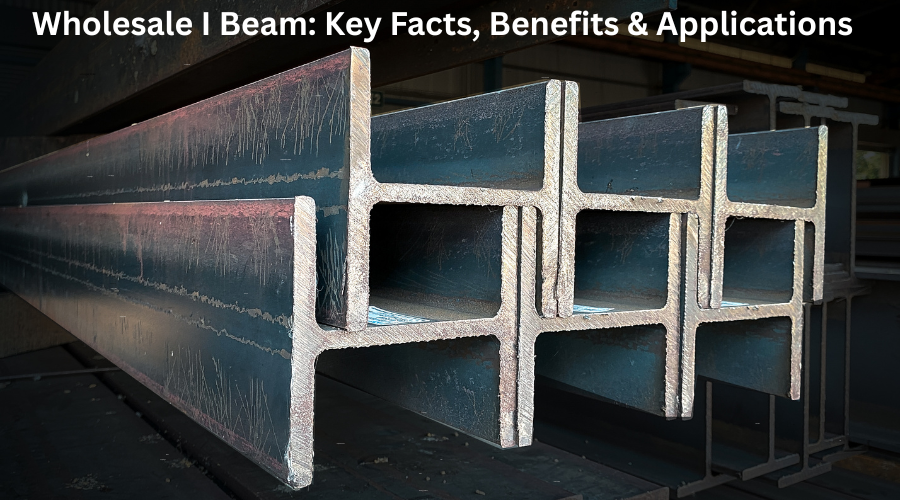
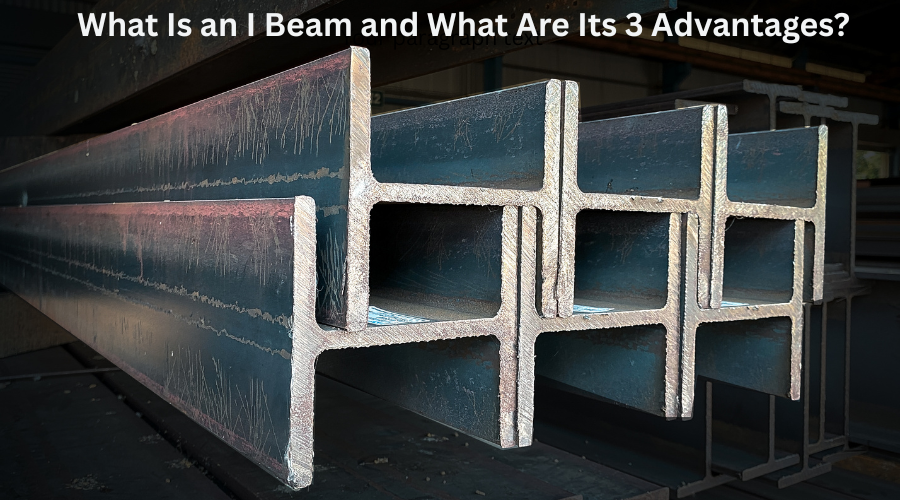
An I beam is a structural steel component that resembles the letter I. It has three main parts. The upper and lower horizontal flat parts are called flanges. The vertical section joining them in the midst is referred to as the web.
When loaded, the beam bends, and the loads are applied to the flanges. The load, the forces that attempt to slip one portion of the beam over another, is opposed by the web. All three of these components make up a beam that is very efficient at carrying a load over its span.
Where are I-beams used?
The uses of beams of this type are enormous. They are used to create the structural frame in the building construction of multi-story office buildings, shopping centers, factories, and warehouses. They run across columns to support the loads of the floors and the roof. They are applied as lintels over door and window openings in both steel- and concrete-framed structures.
Advantage 1- High Strength for Their Weight
Efficient Use of Material
The greatest benefit of an I beam is that it is very strong when compared to its mass. This is a result of the form itself. When loaded over a span, the stresses do not redistribute equally through the cross-section of a beam. The greatest stresses, both tension and compression, are at the top and bottom of the beam. The central part is much less stressed.
A concrete beam with a rectangular shape equally distributes the mass throughout its depth. This implies that a big percentage of the material will be in the middle and will add minimal structural resistance. This is inefficient. The I beam eliminates this by putting all the material in the top and bottom flanges, the highest point of stress, and a narrower web in the middle where less material is required.
More Strength, Less Steel
The outcome is a beam with the same structural performance as a solid beam, but with greatly reduced material usage. Less material would translate to reduced weight and reduced cost. In large buildings with hundreds or thousands of beams, these weight and cost savings are significant. It is also easier to construct since lighter beams are more comfortable to carry and set up in place.
Advantage 2- Excellent Load-Bearing Capacity
Handling Heavy Loads Across Long Spans
I-beams can carry very heavy loads over long distances with minimal deflection. The extent of deflection of a beam depends on the amount of load it carries. Too much deflection is an issue of its own - it results in floors being springy, may ruin a finish or a partition, and in worst-case-scenario, is evidence that the beam is overstressed.
The beam depth, or the distance between the top and bottom flanges, is the determining factor in deflection resistance. A deeper beam resists the same load. This explains why beams used in long-span projects have a much deeper depth than those used in short-span projects.
Multiple Floor Levels Support
The beam is the one that supports floors, people, furniture, and equipment on every level in the multi-story buildings. These loads are passed to the columns beneath them, which in turn pass them to the foundations. The load-carrying capacity of the I beam reduces the need for fewer, lighter structural members per floor compared to less efficient cross-sections.
Advantage 3- Construction has Versatility
Applicable in a variety of applications
The third major benefit of I-beams is their versatility. They may be applied in virtually any structural task that needs a span member. They also operate in compression and bending. Bolts or welds can be used to join them to other steel members. They are available as stand-alone beams or as constituents of a bigger composite structure with concrete.
I-beams can be fabricated on-site. Bolted connections can be drilled into them. They may be welded with additional plates to support capacity expansion and meet specific needs. Such flexibility allows them to be used across a wide range of construction orders and design strategies.
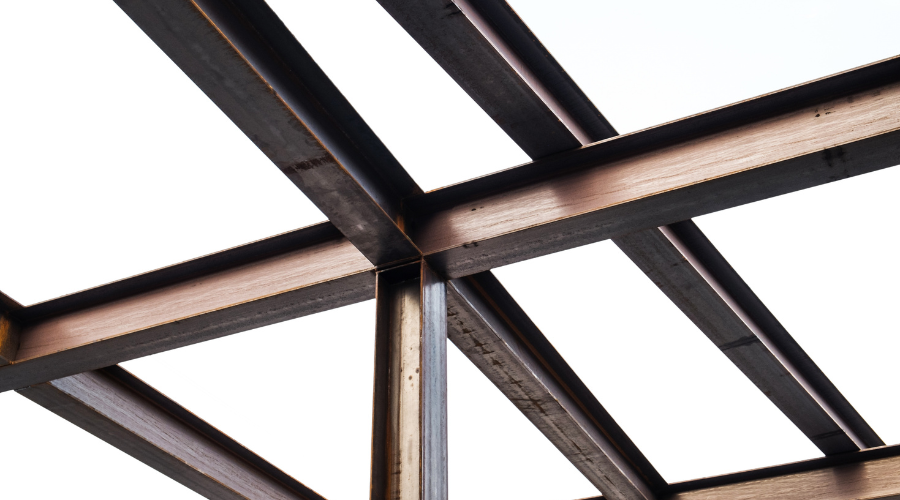
Working with other materials
I-beams are also compatible with other materials. The composite floor systems with steel and concrete have I beams as the steel component, and a concrete slab is poured over. The materials collaborate; steel provides tension, concrete offers compression, creating a floor system stronger and stiffer than either alone.
Conclusion
One of the most intelligent structural shapes ever created is the I-beam. Its special shape is not merely an aesthetic matter; it is a response to the effects loads have on a structural member. The I beam has superior performance with minimal waste by placing material where the stress is maximum and leaving it at its least.
FAQs
1. What is the difference between an I beam and an H beam?
I beams have narrower flanges relative to their depth and are designed primarily for bending loads. H beams have wider flanges and a thicker web, making them better suited to carrying heavy compressive loads in columns.
2. What steel grade is typically used for I beams?
Structural I beams are most commonly made from mild steel grades such as S275 or S355 in metric specifications. Higher strength grades are available for applications with very heavy load requirements.
3. Can I beams be used in residential construction?
Yes. I beams are used in residential construction for long-span floor beams, basement support beams, and lintels over large openings where timber cannot provide sufficient strength or span.
4. How are I-beams connected to columns and other beams?
I-beams are connected using bolted end plates, cleated connections, or welded joints, depending on structural requirements. Connection design is an important part of the overall structural engineering process.
5. Do I beams require fire protection in buildings?
Yes. Structural steel, including I beams, loses strength at high temperatures. In most buildings, I-beams must be protected with intumescent paint, fire-resistant boarding, or sprayed fireproofing to meet building regulations.