

Understanding LVL (Laminated Veneer Lumber): A Sustainable Choice for Modern Construction
The builders and construction firms of today face a challenge of balancing client demands with building regulations. Clients nowadays want structures that are strong and long-lasting. But at the same time, sustainability targets are tightening, and green building codes are becoming stricter. Finding a material that checks both boxes without driving up costs or complicating installation is not easy task for modern builders.
Laminated Veneer Lumber, or LVL, is one solution worth a closer look and a material that delivers on both fronts. It is an engineered wood product that delivers reliable structural performance while supporting your sustainability goals. This blog explains what LVL is, why it works, and what you should consider when sourcing it for your next project.
What Exactly Is Laminated Veneer Lumber?
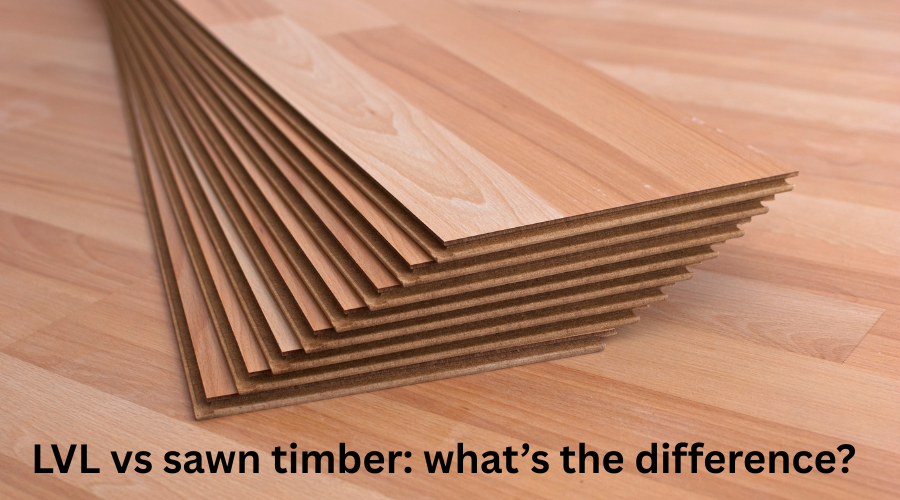
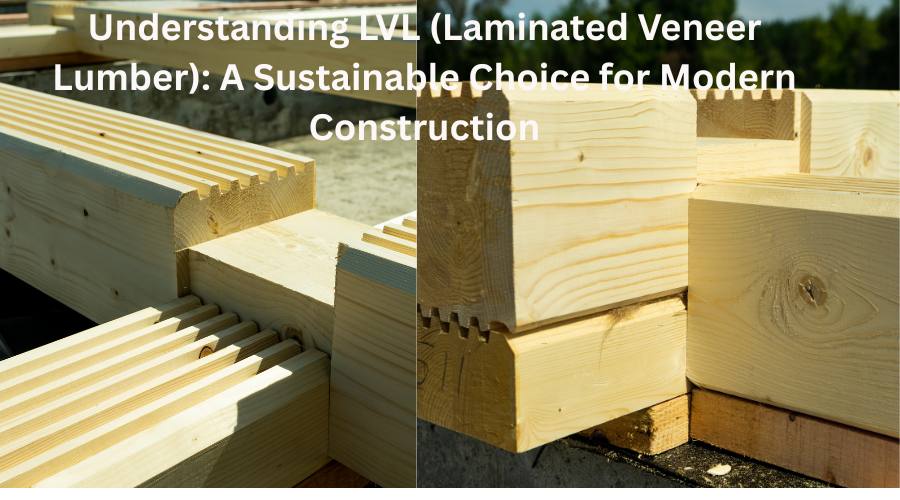
To put it in simple words, LVL is a material built from thin layers of wood, pressed together into a single, uniform beam. The process starts with logs that are peeled into thin sheets called veneers. These veneers are dried, graded for quality, coated with adhesive, and then stacked with the grain running in the same direction. Heat and pressure bond them into a solid piece.
The result is a product that avoids many of the weaknesses found in solid timber. Natural defects like knots, splits, and wane are removed during grading. You get a beam that is consistent from one end to the other. This consistency matters because it means predictable performance on every job.
LVL is not the same as glulam, which is made from thicker pieces of lumber glued together. LVL uses thin veneers, which gives it higher strength and stiffness relative to its weight. It is also different from standard dimensional lumber, which can twist, cup, or shrink as it dries. LVL stays straight.
Why LVL Is a Smart Choice for Sustainable Building
If sustainability is a priority for your projects, LVL offers several advantages over traditional materials.
The most crucial and foremost advantage is that it uses wood more efficiently. Manufacturers peel logs into veneers, which allows them to use a higher percentage of each log compared to sawing dimensional lumber. Less wood ends up as waste. Many LVL producers also use fast-growing species like pine, which regenerate quickly.
Second, LVL stores carbon rather than releasing it. Here is how that works. As a tree grows, it pulls carbon dioxide out of the air and locks the carbon into its wood fibers. When that tree is turned into LVL, the carbon stays trapped inside the beam for as long as the building stands. This is not a small amount. Industry data shows that one cubic meter of LVL can store roughly 800 to 900 kilograms of carbon dioxide equivalent. That is like taking a small car off the road for an entire year. For the environment, that is good news since the carbon is kept locked away for decades. And even the production of LVL is beneficial for the environment because the trees that supply raw material can be replanted, and the carbon absorption cycle continues.
Third, modern LVL adhesives are low-emission. Most reputable manufacturers use phenolic resins or other binders that fulfil strict indoor air quality standards. The way to ensure that the LVL you are getting complies with environmental regulations is to check for certifications like FSC (Forest Stewardship Council) or CARB (California Air Resources Board). These prove that the material was responsibly sourced and produced through an eco-friendly process.
Lastly, LVL reduces jobsite waste. Because it arrives straight and stable, builders do not have to deal with warped or twisted pieces that need to be cut off and thrown away. Less waste on site means lower material costs and less debris heading to the landfill.
What Contractors and Builders Need to Know About LVL
As a builder, you might be interested in how LVL performs onsite. So let us look at that.
Dimensional stability is a major advantage
Solid lumber can twist, cup, or shrink after installation. This leads to callbacks, squeaky floors, and misaligned connections. LVL does not do that. It stays true to its original shape, which means fewer headaches and less time fixing problems later.
Installation is straightforward.
LVL cuts and drills just like wood. You can use standard tools and fasteners. It is lighter than steel, so no need for cranes or special equipment for handling. That is a big hassle that you do not have to worry about. Since it is just a kind of wood and not a completely new and unfamiliar material, your crew can work with LVL using the skills they already have.
Long spans without intermediate supports
Because LVL is stronger and stiffer than dimensional lumber of the same size, you can use it to connect longer distances. This is useful for ridge beams, garage door headers, and floor joists in open-plan designs. Because of the stiff nature, fewer supports are needed. That means faster framing and more design flexibility.
Fewer trips to the lumber yard
Since LVL spans longer distances, you need fewer pieces to cover the same area. This simplifies ordering and reduces the number of deliveries you need to coordinate.
What Sustainability Advocates Should Look For
If you are evaluating LVL from a green building perspective, there are specific things to verify.
Chain-of-custody certification
Ask your supplier whether the LVL comes from forests managed under a recognized certification system like FSC or PEFC. This ensures the raw material was harvested responsibly.
Regional sourcing
Some LVL manufacturers use timber sourced from local forests. This local raw material sourcing not only saves fuel cost but also lowers emissions that contribute to pollution. Local timber sourcing also plays a crucial role in supporting regional economies. Ask where the logs come from.
End-of-life considerations. LVL can be recycled or used as biomass for energy generation at the end of a building's life. It does not have to go to a landfill. This is an important factor for projects targeting circular economy goals.
Energy comparison
Producing LVL requires significantly less energy than manufacturing steel or concrete. For every cubic meter of LVL used instead of concrete, you avoid a substantial amount of embodied carbon.
How to Choose a Reliable LVL Beams Supplier
Not all suppliers are equal. When you evaluate an LVL Beams Supplier or a manufacturer, here is what to look for.
Documentation matters: A reputable supplier will provide load-span tables, grade stamps, and certification documents. These tell you exactly what the product can do and whether it meets your local building code.
Technical support is a green flag: A good supplier has representatives who can answer questions about code compliance, installation details, and product limitations. If they cannot answer your questions or direct you to someone who can, that is a red flag.
Consistency in quality: Search for manufacturers who follow recognized quality standards like ISO 9001 or JAS-ANZ. These certifications indicate that the production process is controlled and consistent.
Published specifications: Reliable manufacturers publish clear data on LVL characteristics like modulus of elasticity, moisture content, and allowable spans. If the information is vague or hard to find, then the supplier might be inferior.
Responsiveness: When you request a certificate of analysis or a sample specification sheet, a good supplier responds promptly. Slow responses or avoiding requests are a sign that the supplier has a lack of documentation, and this means substandard quality.
Conclusion
LVL is not a niche material but a commonly available material that is proven in the market for its performance and functionality. It delivers the triple benefit of stability, strength, and installation convenience. For clients who want greener, more eco-friendly structures , it represents a lower-carbon alternative to steel and concrete without compromising on strength.
But your project can only achieve success if you partner with a supplier who provides clear documentation and verified certifications. No matter which type of project you are pursuing, residential or commercial LVL deserves a place on your shortlist.
FAQs
Where to buy LVL beams?
You can buy LVL beams from engineered wood distributors and large lumberyards. If you want reliable delivery with documented quality, then Unique Material Co. is a great option to source from.
Are LVL beams stronger than traditional lumber?
Yes, they are. LVL is stronger and more consistent than traditional lumber. By removing natural defects like knots and splits during manufacturing, each beam delivers uniform strength across its entire length. This means LVL can carry heavier loads and span longer distances than a piece of solid timber of the same size. You also avoid the warping and twisting that plague dimensional lumber.
What certifications do LVL beams need?
Look for these three key certifications. First, FSC or PEFC for responsible forest sourcing. Second, CARB or EPA TSCA Title VI for low-emission adhesives and indoor air quality. And lastly, a regional product standard mark such as JAS-ANZ (Asia-Pacific), or APA/ANSI (North America).